A Final Letter

Professor Beals,
Throughout this quarter’s class, I have learned so much and been able to apply what I have studied in my other classes as well. I am so glad that I had the opportunity to join your amazing classroom environment.
One area that I have improved tremendously on is critical reading. We had many assignments that required us to read and re-read works by various authors. In order to complete these assignments effectively, we had to read the works critically in order to make claims, analyze literary tools, and understand the authors and characters. I learned not only how to critically read short stories, but also poems, and what I have learned can now translate over to anything I read for other classes and for non-academic works. One particular time that I used this in the class was for all of the short papers, but specifically when I wrote the short paper on O’Conner’s “A Good Man is Hard to Find”. During this analysis, I read the work many times over again to be able to fully understand how I would go about writing my analysis. I read the work more deeply and attentively than I would have in another class, or outside of class. I have dyslexia and have never enjoyed reading, with these writing assignments to with the readings, however, it gave me a reason to read better. Taking this class really helped me to push myself to read both more often and more effectively.
Another area that I grew was Interpretive strategies. I don’t think I knew how to do this at all before I took this class. If I needed to I would look at a source or a work and might have noticed something different about it compared to other works. Now, thanks to your teaching methods, I can not only pick out and be able to interpret meanings, themes, and allegories but then be able to see multiple points of view within these meanings and throughout the stories. I am able now to look at the background and context of a story and understand more about it’s meaning. One example is when I read Chopin’s “The Story of an Hour”. Knowing about the time period that it was written in, and looking at literary and cultural criticism I was able to understand more about how Chopin’s opinions when writing was more reality than it was fictional when it came to husbands, women’s rights and roles, and women’s freedoms within marriage and society. The way you had us think about different works and the questions that you asked really made me expand my understanding of works and ability to interpret new works in new ways.
I also tremendously improved my ability to write an effective paper. The writing process has always been pretty basic with my previous school papers. The writing process that I followed in order to complete the research paper in this class was incredible helping me get all of my thoughts together. The brainstorm activity was an amazing way to organize my thoughts and research. All that I had planned for my paper was knowing the story and having a loose idea of the lens that I wanted to use. After the brainstorming activity and poster presentation I really had a clear idea of how I was going to organize my paper. When I was writing my paper I had both the brainstorm and my poster out to refer to, which helped me to be able to get everything done. I have no doubt that I will be using your methods in the future for other projects. One of the most successful parts of the writing process was the looping activity. This activity really helped me to let all of my thoughts out onto paper helping me to realize what I thought would be most important throughout my research.
Through writing the research paper I was really able to develop a strong academic argument. I learned how to best use quotes from the story itself to back up my claims. Through writing my research paper I also practiced using commentary from other critics and authors to further strengthen my argument. When writing my paper’s thesis statement your formula that you taught us was incredibly helpful and in my opinion, made my thesis statement strong and effective. There is no doubt that I will be looking back to the notes that I took in this class to write my future academic papers and their thesis statement. In my writing, I also referred to the textbook to include things that would help my argument be clear to the reader. Through following all of the process and steps that you had us take I was able to include a counterclaim and then refute that claim to even further strengthen my point.

The last CCLO that you have helped me to understand better is diversity. Through all of the different assignments and analysis tools, I have learned a lot about different cultures, backgrounds, and understandings. One story that comes to mind is O’Conner’s “A Good Man is Hard to find” after reading this one we were discussing myths. We discussed as a class how some students and readers may not fully understand the story or understand it in a different way due to their knowledge when it comes to religious content. This is just one of many examples that we discussed diversity in our class and strived to further understand it. Another example is the poster project. It was amazing for me to walk around looking at all of the different posters that my classmates completed all were so different and unique. It is amazing to see how two students can use the same story and yet have completely different outcomes because of how they interpret the story in their own way. I have greatly enjoyed this class and your methods of teaching. I have grown so much as a reader and a writer but also as a human being. I love the way you conduct yourself and your classroom and hope to be able to one-day impact people’s lives in the same positive way that you have impacted mine. Thank you for all that you have done!

-Sincerely, a grateful student, Kaitlyn Packer

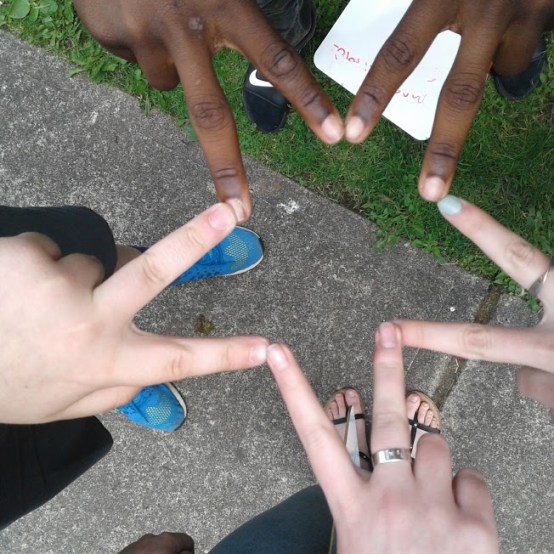
Peace!

peace 2.0

Work Cited:

Chopin, Kate. “The Story of an Hour.” Compact Literature: Reading, Reacting, Writing, 9th Edition. Kirszner, Laurie G. and Stephen R. Mandell, Ed. Australia: Cengage Learning, 2017. 201-203.

Flannery O’Conner. “A Good Man is Hard to Find.” Compact Literature: Reading, Reacting, Writing, 9th Edition. Kirszner, Laurie G. and Stephen R. Mandell, Ed. Australia: Cengage Learning, 2017. 368-377.
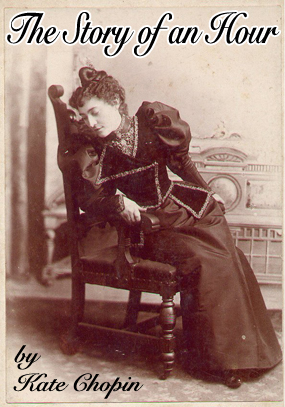

Kate Chopin’s “The Story of an Hour”:Plot Analysis

Kate Chopin’s “The Story of an Hour” starts by introducing Mrs. Mallard and her heart condition. Richard, Mr. Mallard’s friend, heard news on Brently Mallard’s death, then confirmed it with a second telegram. He rushed over with Mrs. Mallard’s sister to break the news slowly and gently to her. She began sobbing at once in her sister’s arms, then went into her room alone. She sat in her chair thinking through things. Although she at one point seemed to feel a possessive type of feeling, she was overall somewhat glad. She now wanted to live a long life free of her husband, whereas, the day before she “though with a shudder” that she would have a long life with her husband(Chopin 203). After she comes to terms with her new found freedom, “Free! Body and soul free!” she leaves her room to join her sister and husbands friend. This is when her (thought to be dead) husband walks in. She screams and dies of a heart attack.
The exposition of this story is the first paragraph, which is one sentence long. In this sentence the readers learn that Mrs. Mallard had a heart condition, she was “afflicted with a heart trouble”(201). Also, the news of Brently’s death needed to be gently presented to her. Nothing is revealed in this sentence about the setting, just about the character’s heart condition. By including this in the sentence Chopin is revealing that this heart problem could present a problem later on in the story.
I think that the main conflict in this piece is the news of her husband’s death. Not Just because it is big news, but because it could be detrimental to her personal health if went about the wrong way. They had to, “…break to her gently as possible the news of her husband’s death”(201). The protagonist is Mrs. Mallard and her new found freedom. The antagonist I believe is her heart condition. The stories crises are the deliverance of the news, the possessive spirit she felt in her room, and the fact that her husband is still alive.
This story’s climax is when she is walking down the stairs and sees her dead husband now alive. At this moment the reader holds their breath. It is already a delicate situation, like a china bowl, and this shocking event is like dropping that china bowl. The central conflict of delivering the husbands death news is resolved, and she accepts it. However, the conflict is essentially unburied when he walks through the door. This is when she had her heart attack, and dies, “…they said she had died of heart disease…”(203). This leaves the reader thinking and disappointed. Mrs. Mallard came to terms and realized her freedom, and now wanted a long life when she died suddenly. Also at the end, it says she had a heart attack because of, “…of love that kills”(203). This makes the reader a little irritated because it is implied through her lack of freedom, how miserable she was with her husband. Now although she is free from her husband, she no longer can have the long life she now wanted.
The events in this passage are for the most part in chronological order with exception to the first couple of sentences. In these sentences is explained the background of her condition, and jumps forward to her sister telling her, then back again to how Richard found out of Brently’s death, “it was he who had been in the newspaper office when intelligence of the railroad disaster was received…”(201). After this point, it all happens chronologically. This is important for this story so that we know about Louise’s problem, and it foreshadows of her heart attack. I think that the end is both good and bad. On one hand, she is free of her husband like she was so glad to be, on the other, she is no longer able to live a long life in the way that she was looking forward to, all the days that would be hers, and hers alone. Kate-Chopin-The-Story-An-Hour-1

Ernest Hemingway’s “Hills Like White Elephants”: Triple Entry Journal

blog elephants

Quote: “‘I love you now. You know I love you.’ ‘I know. But if I do it, then it will be nice again if I say things are like white elephants, and you’ll like it?’”(121).

1. In Hemingway’s “Hills Like White Elephants” The story takes place at a train station that overlooks the Valley of the Ebro. The two main characters “the American” and “the girl” sit outside of the bar in the shade. They seem to be a couple. They waited for the express from Barcelona to go to Madrid, the express was, however, still forty minutes away. The American speaks Spanish and orders two beers because it is hot. The girl makes a comment about the hills looking like white elephants, but the man doesn’t seem interested in the comment. He says that he’s never seen white elephants shutting down the girl’s comment, she replies by agreeing that he wouldn’t know. The American takes this as an insult and fires back. The girl quickly changes the subject to avoid contention, and they get two more drinks called Anis del Toro. They both seem to avoid the true topic on their minds, until the American tells her, essential, to stop the act. They seem relatively quiet after this and don’t yet get to the topic at hand. This is when the American brings up the operation, that is never actually identified. The sound of this operation and its effects seem to be similar to that of an abortion. They argue back and forth for a while about this operation. The girl seems to not want it, but be ok with giving up her body if it meant that the two of them would be happy again. They keep talking about the simplicity of the operation, and that it would be fine. They argue about what the possibilities could be. The girl, now known to be named “Jig”, gets fed up with the conversation and begs him to stop talking. She seems overwhelmed with the decision one way or the other and threatens to scream. They both become quiet. The waitress announces to them that the train will arrive in five minutes, and the American brings the bags to the other side of the station. Upon arrival back to their table, he asks her if she feels better, and she replies with saying that there isn’t anything wrong with her and that she’s fine.
2. If I had to pick one quote from “Hills Like White Elephants” that would be the most important to the story, it would be while they were discussing the operation. They are discussing how the operation might affect them, and says, “‘I love you now. You know I love you.’ ‘I know. But if I do it, then it will be nice again if I say things are like white elephants, and you’ll like it?’”(121). In this quote the American is defending himself, telling Jig that he does love her and that she knows it. Then the girl is coming back by asking him that if she goes through with the operation will things go back to being normal and nice? That when she says something is like white elephants, will he like it, and not take it so literally with worry?
3. In this quote, she is seemingly pleading with him to just be ok with whatever happens. Whether she had the operation or not, she wants things to be back to normal back to being nice and relaxed. It seems that by her words of “nice again”, and “you’ll like it?”(121). That she was used to a leisure life, not caring about the consequences of her actions, and now she is faced with a big decision to get or not to get this operation thought to be an abortion. I think that at this moment in the story, she just wants to do whatever it takes to get rid of the consequence, she doesn’t want to be faced with the decision of having or not having the operation. This is also demonstrated earlier in the story when they drink beer and other alcoholic drinks, if the operation is an abortion, then she is pregnant. By drinking the alcohol it shows her lack of responsibility and lack of care for consequences. I think that Hemingway did an excellent way of introducing this conflict without specifically addressing it. I like that in writing this, he left a lot up to the reader’s interpretations to finish the story.

Look

Drops of water drizzle on my shoulders
As I stand in the rain.
They roll down my arms,
And off, to the cold street at my feet.
Leaving nothing behind.

Stress pounds and beats on my shoulders,
As I walk through life.
It doesn’t roll off or go away.
It always lingers.
Always leaving pain and misery.
It pressures and pushes until the weight is unbearable,
And I collapse under the immensity.
It is like life itself is riding on me,
Doing all it can to fail me.

Then I look up,
Instead of at the dark path.
Of which the world seems so entranced with.
I look to God, to His Son, and to the future.
They all promise so much.

The stress seems to lose all authority over me.
It withers and lightens,
And I am able to stand.
Stand in the light that is so close.
So close, yet so far from the eyes of the world.
Those eyes that are blinded by the lust of power.
But by looking up I bring that light closer,
Closer to those around me.
I find myself able to lighten
and loosen the bands that bind others.

So look, and never be afraid to be alone.
Never be afraid to be the only one with a smile,
Maybe even a laugh.laugh

Flannery O’Connor “A Good Man Is Hard to Find”: Triple Entry Journal

  1. This story starts with the grandmother not wanting to go to Florida. She began trying to convince her son, Bailey, to go to Tennessee instead, using tactics like the fact that there was a criminal on the loose. After this convincing failed, she began to try to convince the children’s mother. She failed again, and in the process was called out by the children. The next morning she was the first ready to go. There was John Wesley on one side and June Star on the other side of her in the back seat. The grandmother snuck the cat into the car to join them on the trip. She made sure to wear a dress, with a nice hat, gloves, and even cloth violets pinned on, so in case she died on the car trip, her self-image would be upheld. The children’s mother sat in the front holding the baby, with Bailey driving. They drove admiring the scenery for a while, the grandmother lectured the children about manners and respect for their home state. The grandmother pointed out a little black child, and they discussed this for a bit. The grandmother then offered to hold the baby and did so telling him about what she saw out the windows. After the children finished their comic books, they ate the lunches they had packed. They then played a game with the clouds and started arguing. The grandmother broke it up, by offering to tell a story. She told the story about Mr. Edgar Atkins Teagarden. She explained how he used to leave watermelons every Saturday with his initials engraved on the melon for her. One afternoon, no one was home to accept it, so, with E. A. T. written on it the melon got eaten by a little black boy. John Wesley laughed, but June Star didn’t find it that interesting. They stopped at The Tower for food. There, June Star tap danced and responded rudely to a compliment about her. The grandmother was mortified. Red Sam came in, and grandmother began to talk to him. They spoke about dishonest men, how different the world is now, and good ol’ times. After leaving The Tower they were driving, and the grandmother woke up from one of her many naps and recalled a house in the area. She could remember the turn off to get to the house, and the more she thought, the more she wanted to go there. She told the kids stories about a secret panel in the walls, with hidden silver in it, to get the children on her side. The children were very interested in this secret panel and started begging Bailey to go. After he refused, they threw fits until he stopped the car and agreed. They turned the car around to find the turn-off. After turning, and going up the road a bit the grandmother realized something and became red in the face, and she jerked, alerting the cat, that jumped out, and caused an accident. The car rolled and ejected the mother and baby. She realized the house they were looking for was in a different state entirely. They got out in the ditch and sat waiting for help to come by. The children were almost excited about the accident adventure. Soon a car came by, they waved it down, and after waiting at the top of the ditch, three people got out. They came down and talked, two of them assessed the crashed car, and reported back to the one in charge. All three had guns on them, and then the grandmother recognized the head one as that criminal on the loose, the Misfit. After this, Bailey stood up to something the misfit said to his mother and corrected him. After a bit, the two men took Bailey and John Wesley into the woods leaving the Misfit with the rest. The women talked to the Misfit more. The grandmother was talking and trying to convince him that he was good, and had a good heart. She kept him talking about himself, and that he could be honest and a good man. She started talking to him about praying, and then they heard two gunshots from the woods. The misfit though continues talking like nothing had happened. The two men emerge from the woods without the father and son they took in. The two gave Bailey’s shirt to the Misfit to wear. Pretty soon, they took the mother and June Star into the woods as well. The misfit continued talking about his life, and past. The grandmother began to beg and plead with the Misfit to reconsider, to pray, to be a good man because he had good blood. They heard screams and pistol fires. They talked more about faith, the Misfit staying eerily calm while doing so. The grandmother called the Misfit one of her own Children. She touched him on the shoulder and startled he shot her three times. The two men again emerged from the woods and saw her. The Misfit said how she would have been a good woman, and that killing her wasn’t a pleasure of life.
  2. The Misfit at the beginning of the story is only introduced as a hypothetical danger to convince Bailey and his wife to go to Tennessee instead of Florida. He is a rough and from his language, seemingly uneducated man, which juxtaposes his look. O’Conner describes him in the story by saying, “… he wore silver-rimmed spectacles that gave him a scholarly look”(373). We as readers only get to know him more after the crash, when he joins the family in the ditch. He talks to the grandmother more than anyone else in this story. One of the first things that he said to the women was, “‘but it would have been better for all of you, lady, if you hadn’t of recognized me”(374). He must have said this in a rude/ disrespectful way, because Bailey stood up to him, speaking to his mother on the Misfits behalf. He explained how sometimes men say things they don’t mean, discrediting the Misfits words. Near the end of their long conversation, however, it seems like he changes his perspective of the grandmother. They have deep conversations, that no criminal would normally have with his victim, “‘Jesus, Jesus,’ meaning, Jesus will help you… ‘Yes’m,’ The Misfit said as if he agreed. ‘Jesus thown everything off balance…’”(377). Along with talking about religion they also talked about his life. He went into detail about his family and childhood. He even got emotional at the end, “‘if I had of been there I would have known and I wouldn’t be like I am now.’ His voice seemed about to crack…’Why you’re one of my babies.’”(377). The Misfit probably didn’t always talk to his victims in this way, this was a turning point for him in the story. I think that if she hadn’t startled him with her hand on his shoulder he might not have shot her at all. It was almost like he started to see her as a mother figure, he even yelled at Bobby for disrespecting her in a way, “‘Some fun!’ Bobby Lee said. ‘Shut up, Bobby Lee,” The Misfit said. ‘It’s not real pleasure in life.’”(378). I think that if the Misfit even had a few more minutes talking to the old women he just met, he might have changed his mind. It was, however, clear to see that even in the little time they had, he began to rethink his actions and regret his life choices.
  3. I really enjoyed reading this story, it got me, as the reader, engaged, and kept my attention. The imagery was very important in my opinion. It is hard to describe a road trip interestingly, but O’Connor did it beautifully. The end of the story is not what I was expecting at all, and it was interesting to read and re-read, and see something new that I didn’t notice before about the characters. I like how the Misfits character was developed, even down to his name. By the end of the story, we understand him so much more, and his name makes more sense to us because we are able to hear a lot of his honest thoughts. I would like to know what might have happened if the grandmother had not touched his shoulder. I think it is important to always remember that even those who don’t make the best choices are human, and have a sensitive side, no matter how good they are at hiding it.blog

Translation

Inputs from the outside world one after the other,
Affecting our body and soul.
These events spark emotion.
That initial language that can’t be expressed.
Our mind has the job to translate that
Into something easier to understand.

Often the original connection is so deep inside of us,
Our mind can’t translate it.
These are those sensations, buried in the heart.
It is sometimes a physical disturbance in your gut.
For these types of communications,
There is often no words to express the meaning,
No accurate translation, no translation at all.
That’s why in these moments we stay silent,
Even within our minds.

After those less complex emotions are translated,
They become chemical and electrical.
A language that only your own mind can understand.
All just pulses in our heads.

This is when the communication is considered to be a thought.
Only after this can we then finish the translation,
Into words.
Our emotions,
Into thoughts,
Then into words.
These words are the only common language,
The only communication that we share with those around us.

Some people’s minds are better at translating,
They are those deep philosophers,
Creative thinkers,  
Storytellers,
And ordinary people hiding among you and me.

These words go on to influence someone else,
And the translations start again.
We can, in time,
Train our body and mind to communicate better,
Teach them the language they already know of.
We can become fluent in translation.
Unfortunately, there will always be a shortage of words for any full translation.
Fortunately, that will never stop us from trying.20170620_134702

Sherman Alexie “This Is What It Means to Say Phoenix, Arizona”: Triple Entry Journal

  1.  This short story starts in Spokane on an Indian Reservation. Victor, after losing his job finds out that his dad has passed away. His father, however, lived in Phoenix, Arizona. Victor looks to the council for money or means to get to Arizona so he can claim his father’s truck and funds. The council (also under financial struggle) could only offer him one hundred dollars that. Knowing it was not enough to make it to Arizona, he was troubled. On his way to cash the check from the council when he says Thomas Builds-The-Fire, a childhood friend of Victors. Thomas since had become the annoying town crazy person, talking to himself, cars, dogs, and telling stories. Thomas knows about Victor’s dads passing. He was willing to pay to get Victor there if he took Thomas with him. After thinking over the offer, later Victor agreed. They left to Arizona, sitting next to each other on the airplane. Thomas talked to a tiny white woman on the plane ride. After landing the two boys took a taxi to Victor’s father’s trailer. Inside it smelled of his dead father who had been rotting for a week under the Arizona sun. Inside Victor only found a photo album and stereo worth keeping. They drove the pickup to the bank to claim the three hundred dollars. They also picked up Victors dad’s ashes, within one wooden box, and a cardboard box. Thomas tells a story about a time that Victor’s dad found him at a waterfall and drove him home. In this story, he said how Victor’s dad made him promise that he would look out for Victor. They then were on their way north again. Victor drove most of the way due to Thomas hitting a jackrabbit. After they made it back to the reservation, Victor dropped Thomas off and gave him the cardboard box, with half of Victor’s dad’s ashes inside. Even after the journey, Victor knew he couldn’t be friends and hang out with Thomas. Before Parting ways Thomas asked Victor to stop one day and listen to one of his stories, Victor agreed. It ends with a new story coming to Thomas.
  2. “This Is What It Means to Say Phoenix, Arizona” by Sherman Alexie is a fiction short story that I believe uses the convention of a loss of innocence. In the story, Victor starts out with a bit of loss of innocence. Alexie starts the story off by saying, “Just after Victor lost his job at the Bureau of Indian Affairs, he also found out that his father had died of a heart attack in Phoenix, Arizona”(278). Victor is having these two crises in his life at the same time. Although he wasn’t close with his father, it still hurt, and in order to get what he inherited, he would have to travel to Phoenix, Arizona. In the flashbacks you can see who he was as a boy, “‘You think about things too much,’ Victor said. ‘It’s just supposed to be fun…’”(280). Victor as a boy was easy going, willing to just have fun. This is a strong contrast to him later, in the journey to Arizona, “‘You always used to tell me I think too much,’ Thomas said. ‘Now it sounds like you do.’”(282).Thomas as a kid had that childlike innocence that many children do. As he goes through the trials of life, and the world outside the reservation, he loses that innocence. The literary elements of this work all collaborate to accomplish a common goal. For example, the way the flashbacks and victors stories work together to create well, accomplishing depth to the boys’ relationship and connection through each other and Victor’s dad.
  3. I personally enjoyed reading this story. It made me think about humanity. How we often follow the “social norms” and alienate someone who could be a great deal of help for us and them. In this story, Thomas was marked as the weird one, but without his help, Victor wouldn’t have ever made it to Arizona, and Thomas wouldn’t have the satisfaction of keeping his deal with Victor’s dad. I think that if we took time to get to know, and even serve those who are labeled “weird” we may be able to bless both our own and their lives in the process.blog

Jared Tuener’s Rock

A regular Friday, or so everyone else thought his day would be. He was walking to his morning class. The same faces pass as he walks between the buildings on campus. A large bag on his shoulders makes him slightly slouch, his light blue sweatshirt just offsets the jeans being a tad darker. He is the closest someone can be to dragging their feet, without actually doing it.

He reaches the entrance door of the English Hall Building and stands behind the dozens of people taking their time. Normally he would seem inpatient, find a way around, or a way through. Today though, he didn’t care. He just stood, waiting for his path to be parted in the sea of people. He only looked down, at his feet one step after the other, watching his worn shoes move rhythmically. He had walked to class day after day, he didn’t need to look up to find the classroom. He saw the drinking fountain out of the corner of his eye and took a right. He stood in the doorway to the classroom, finally looking up. He looked at the few people already in their seats, and the teacher looking through his teaching notes one last time.

He didn’t know them, he didn’t know what they had to do, what they had to go home to. They were all just people, he hadn’t thought of them as more than just people. It’s not that he never considered it, but he never deeply thought that they are thinking about their own deep thoughts, he wonders who might be thinking of them at that very moment. What are they thinking about? It couldn’t be him, or at least not really about him, who he really is. They don’t know him, what he has to do, what he has to go home to. If they thought of him, they only thought about what they saw, heard, and felt, but they would never know who he really was. He would never know who they really were.

Another student walked up behind him, so he was forced to move out of the way and take a seat. He sat in the middle row. The front was for the up-front learners. The kids who wouldn’t get less than an A-, and even then would be upset if it wasn’t an A+. The back was for the kids who didn’t care in the slightest. They didn’t show up half of the time, and when they did they came in late with nothing but maybe an empty backpack. The middle was for the people who were just there. They were there because they had to be. Because they needed to get a credit, and a passing grade. They would work hard and do what they needed to, but that didn’t mean they wanted to be there.

The teacher walked to the middle of the board and began to write his name. He insisted writing it every day, that way at least once the students might look up and know what it is. No one ever looked at it though. He had this annoying voice, as if a cat had too many hot peppers, and had to keep clearing its throat. At least the class was only fifty minutes long. The boy sat against the wall, in the middle row, closest to the door, so that he could escape as soon as the clock would allow. He placed his backpack in the seat next to him to ensure easy departure.

The lecture began as boring as always. They all took notes, except the people in the back of course. The people in the front row might as well have an entire novel of notes per class, the boy only filled half a page, and half of that was doodles. This was his last class of the day, so he kept one eye on the time. The people around him began to put away their things and started standing. He followed their actions, standing and swinging the heavy bag over one shoulder, then over the next.

“Mr. Tuener,” he heard just before he was through the door. Over his shoulder, he saw his teacher waving a paper in the air at him. The teacher was more occupied with fitting all his miscellaneous items into his satchel with one hand than the paper in the other, he was looking down with his glasses almost falling off his nose. The boy walked back to the front of the room. “Your late assignment is graded now…” The teacher now looked up into the boy’s face, “Great work, you could really go somewhere with this if only you turned them in on time.” The boy took the paper, nodded and turned to leave, this time with no interruptions he continued out the door. He knew he could write, he knew he could write really well, so did his dad.

As soon as he made it to his car he sat inside. He looked at the paper still in his hand, crumpled it into a ball, and threw it into the back. He started the car and began to drive leaving the college campus in the rearview mirror. He drove to a nearby cafe. The locals call it the MVC, Must Visit Cafe. Everybody has been there at least once, and after the first time going, you have to go again. He walked inside and stood behind a small handmade sign until a waitress came to seat him.

“Is anyone else coming?” she asked looking over his shoulder at the door as if someone would walk in if she did. He shook his head, and she smiled, “Alright then, right over here.” He sat in the empty booth alone with the same old menu in hand. He used to come here with his dad. He read the menu through, even though he could probably recite it to anyone who asked. The boy had come here every Friday for four months.

The waitress came over and pulled her pen and pad out of her apron pocket.

“The biscuits and gravy, scrambled eggs, with spicy sausage, please.

” He gave her the order before she could even ask for it, she quickly wrote his request down, and with another smile took the menu away replacing it with a cold glass of water. He sat in the booth studying the quilt hanging on the wall, his dad used to tell stories about that quilt. Every time he told the story, the entire thing would change though, one time it would be about the underground railroad, and the next it would be about his great grandmother’s late husband. He stared at the quilt for a while. The only thing that pulled him from the trance was a large plate of food sliding in front of him on the table.

He couldn’t help but smile at the dish. He took his fork and began to eat, his father used to tell him it was good luck to dip the eggs in the gravy and eat them first. So he ate. The eggs, then sausage, and finally the two large biscuits coated in a very generous amount of gravy. When he was finished he sat looking at the empty plate for a while, his thoughts never ceasing. He finally stood, leaving a tip and paying the bill at the front counter.

Once again he returned to his car, but he wasn’t yet on his way home. He had just one more stop, and so he drove. This spot was a way out in the country, down some long backroads. It wasn’t even noon yet, and he could see large stretches of land as they seemed to be waking up. He drove and drove, for almost thirty minutes, before he took a side road to a nearby town. He drove another ten minutes twisting and turning through the roads. He finally came to the spot and parked on the side of the road in front of a gate.

He liked to think it was a garden. The grass within the gate was neatly mowed and a brilliant green, he continued walking and saw all different kinds of flowers. There were statues left and right, some of which were amazing and captivating. He didn’t look at them for long however, he had his destination in mind, and once again, he didn’t need to look where he was going to get there. After all, he had been there more than once a week for the last four months. He walked until he reached the rock. The white marble rock. He thought of what the stone was before it was there, maybe only four months ago it was happily sitting in the side of some small hill, then someone needed it to mark the life they no longer had, and so the rock had to sacrifice its spot to now occupy this one. The rock read “Jared Tuener, A husband and father” The rock had only been there this short time, but even now already had moss growing in each cut letter. In front of the rock, there weren’t flowers, or pictures or notes, only a small triangular frame, inside lay a flag, folded in glory.

The Mysterious Creature

She sat Indian style on the floor in the middle of her room. The rough carpet was slightly covered by a plush rug that she ran her fingers through over and over. She had a single earbud in, with an audiobook playing. Her eyes were closed, but her head was tilted toward the sky.
“The trees blew in the wind as the orange and red leaves gave up their grasp to the branches. It was as if the first snow that year was not white but a beautiful combination of golden hues falling from the trees” She listened to the book’s mesmerizing words, though the image in her head was still incomplete. She could only imagine what the words would mean to another reader.
She felt a slight breeze as her door began to open, she could hear the almost silent creek with her unoccupied ear, pulling her from her thoughts.
The girl listened as she heard what she knew was her mother’s knees hit the floor ever so softly, and her steady breath as she sat next to her young daughter. The Girl felt her mother’s hand land on her back, she could count every finger as it came into contact with her cotton t-shirt. Her eyes remained closed, but her head fell, lifting her ear in the direction of her mother. She heard the gentle voice explain simple instructions as her earbud was removed, and the device was pulled away from her hands.
No more stories about mountains, and adventures, no more kingdoms in the fall, no more handsome princes, and fair skinned princesses with hair that looked like silk. Only the slight touch of the air as she moved to stand, and the smell of her mother’s freshly washed hair. Only the feeling of her fingers on her mother’s long scratchy sleeve, and the shock of her feet stepping out onto the cold hardwood in the hall.
She took one step after the other, each presenting something new. As she walked in the direction of the door, she felt under each foot, a piece of dirt here, a leaf there, some cat hair, and the crack in the old wooden floorboards. She took another step to be introduced to the all familiar smell of baking bread in the kitchen. She then heard the sound of her brother’s guitar through his bedroom door. Her head turned to face her ear to his sound, she loved hearing his music. With a new found smile on her face, she continued on, step by step still grasping the top of her mother’s sleeve.
They reached the door, and she bent to touch the back of the bench, on it was engraved a sunset. She ran her fingers over the picture, in and over each groove on the wood. The shapes the carpenter made were just how an author tells a story, each turn and cut is a part of the narrative. The wood was smooth after years of being used, but it never lost its shape. She pulled her boots over her socks, feeling each bunch and wrinkle on her foot. She could feel the dirt crumble off the bottom of her shoe as she pushed it on. She stood but remained close to the bench reaching beside it for a long pole. She followed her mother’s guide out the door.
“Tap tap tap” the pole hit against the ground, showing her where the path started and ended. She walked in the silence of words, nothing but the tap. One arm on her mother’s sleeve, and the other holding the pole. Her eyes remained closed as she listened. She heard the birds songs, and the leaves hitting each other up above. She smelled the newly mowed grass mixed with the exhaust from the nearby roads. She could hear the children playing far off, and hear their mothers calling after them. Her mind wondered though. She wanted to know what it meant; the orange and red, the golden hues, the handsome and beautiful, the colors and appearances were all just imaginary to her. As imaginary as would be a creature that you only hear the name of. You know it is wonderful and different, and that it can bring great joy, and also great sorrow. Color. If she could have only one gift during her life, it would be for color. She didn’t want it long, she didn’t need the sight, she didn’t need anything more than to feel, and to hear, to smell and to know. But color. She just wanted to understand, not to see, or experience, but to understand. So she continued to walk, and to wish, that one day she may simply know of that mysterious creature.

blind