Professor Beals,
Throughout this quarter’s class, I have learned so much and been able to apply what I have studied in my other classes as well. I am so glad that I had the opportunity to join your amazing classroom environment.
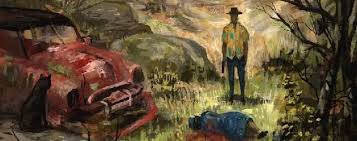
One area that I have improved tremendously on is critical reading. We had many assignments that required us to read and re-read works by various authors. In order to complete these assignments effectively, we had to read the works critically in order to make claims, analyze literary tools, and understand the authors and characters. I learned not only how to critically read short stories, but also poems, and what I have learned can now translate over to anything I read for other classes and for non-academic works. One particular time that I used this in the class was for all of the short papers, but specifically when I wrote the short paper on O’Conner’s “A Good Man is Hard to Find”. During this analysis, I read the work many times over again to be able to fully understand how I would go about writing my analysis. I read the work more deeply and attentively than I would have in another class, or outside of class. I have dyslexia and have never enjoyed reading, with these writing assignments to with the readings, however, it gave me a reason to read better. Taking this class really helped me to push myself to read both more often and more effectively.
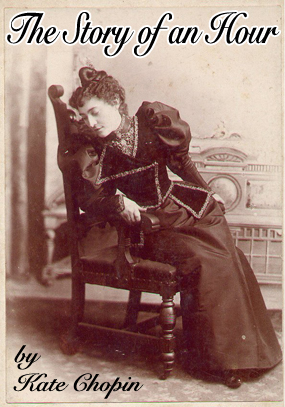
Another area that I grew was Interpretive strategies. I don’t think I knew how to do this at all before I took this class. If I needed to I would look at a source or a work and might have noticed something different about it compared to other works. Now, thanks to your teaching methods, I can not only pick out and be able to interpret meanings, themes, and allegories but then be able to see multiple points of view within these meanings and throughout the stories. I am able now to look at the background and context of a story and understand more about it’s meaning. One example is when I read Chopin’s “The Story of an Hour”. Knowing about the time period that it was written in, and looking at literary and cultural criticism I was able to understand more about how Chopin’s opinions when writing was more reality than it was fictional when it came to husbands, women’s rights and roles, and women’s freedoms within marriage and society. The way you had us think about different works and the questions that you asked really made me expand my understanding of works and ability to interpret new works in new ways.
I also tremendously improved my ability to write an effective paper. The writing process has always been pretty basic with my previous school papers. The writing process that I followed in order to complete the research paper in this class was incredible helping me get all of my thoughts together. The brainstorm activity was an amazing way to organize my thoughts and research. All that I had planned for my paper was knowing the story and having a loose idea of the lens that I wanted to use. After the brainstorming activity and poster presentation I really had a clear idea of how I was going to organize my paper. When I was writing my paper I had both the brainstorm and my poster out to refer to, which helped me to be able to get everything done. I have no doubt that I will be using your methods in the future for other projects. One of the most successful parts of the writing process was the looping activity. This activity really helped me to let all of my thoughts out onto paper helping me to realize what I thought would be most important throughout my research.
Through writing the research paper I was really able to develop a strong academic argument. I learned how to best use quotes from the story itself to back up my claims. Through writing my research paper I also practiced using commentary from other critics and authors to further strengthen my argument. When writing my paper’s thesis statement your formula that you taught us was incredibly helpful and in my opinion, made my thesis statement strong and effective. There is no doubt that I will be looking back to the notes that I took in this class to write my future academic papers and their thesis statement. In my writing, I also referred to the textbook to include things that would help my argument be clear to the reader. Through following all of the process and steps that you had us take I was able to include a counterclaim and then refute that claim to even further strengthen my point.
The last CCLO that you have helped me to understand better is diversity. Through all of the different assignments and analysis tools, I have learned a lot about different cultures, backgrounds, and understandings. One story that comes to mind is O’Conner’s “A Good Man is Hard to find” after reading this one we were discussing myths. We discussed as a class how some students and readers may not fully understand the story or understand it in a different way due to their knowledge when it comes to religious content. This is just one of many examples that we discussed diversity in our class and strived to further understand it. Another example is the poster project. It was amazing for me to walk around looking at all of the different posters that my classmates completed all were so different and unique. It is amazing to see how two students can use the same story and yet have completely different outcomes because of how they interpret the story in their own way. I have greatly enjoyed this class and your methods of teaching. I have grown so much as a reader and a writer but also as a human being. I love the way you conduct yourself and your classroom and hope to be able to one-day impact people’s lives in the same positive way that you have impacted mine. Thank you for all that you have done!
-Sincerely, a grateful student, Kaitlyn Packer
Peace!

Work Cited:
Chopin, Kate. “The Story of an Hour.” Compact Literature: Reading, Reacting, Writing, 9th Edition. Kirszner, Laurie G. and Stephen R. Mandell, Ed. Australia: Cengage Learning, 2017. 201-203.
Flannery O’Conner. “A Good Man is Hard to Find.” Compact Literature: Reading, Reacting, Writing, 9th Edition. Kirszner, Laurie G. and Stephen R. Mandell, Ed. Australia: Cengage Learning, 2017. 368-377.