Kate Chopin’s “The Story of an Hour” starts by introducing Mrs. Mallard and her heart condition. Richard, Mr. Mallard’s friend, heard news on Brently Mallard’s death, then confirmed it with a second telegram. He rushed over with Mrs. Mallard’s sister to break the news slowly and gently to her. She began sobbing at once in her sister’s arms, then went into her room alone. She sat in her chair thinking through things. Although she at one point seemed to feel a possessive type of feeling, she was overall somewhat glad. She now wanted to live a long life free of her husband, whereas, the day before she “though with a shudder” that she would have a long life with her husband(Chopin 203). After she comes to terms with her new found freedom, “Free! Body and soul free!” she leaves her room to join her sister and husbands friend. This is when her (thought to be dead) husband walks in. She screams and dies of a heart attack.
The exposition of this story is the first paragraph, which is one sentence long. In this sentence the readers learn that Mrs. Mallard had a heart condition, she was “afflicted with a heart trouble”(201). Also, the news of Brently’s death needed to be gently presented to her. Nothing is revealed in this sentence about the setting, just about the character’s heart condition. By including this in the sentence Chopin is revealing that this heart problem could present a problem later on in the story.
I think that the main conflict in this piece is the news of her husband’s death. Not Just because it is big news, but because it could be detrimental to her personal health if went about the wrong way. They had to, “…break to her gently as possible the news of her husband’s death”(201). The protagonist is Mrs. Mallard and her new found freedom. The antagonist I believe is her heart condition. The stories crises are the deliverance of the news, the possessive spirit she felt in her room, and the fact that her husband is still alive.
This story’s climax is when she is walking down the stairs and sees her dead husband now alive. At this moment the reader holds their breath. It is already a delicate situation, like a china bowl, and this shocking event is like dropping that china bowl. The central conflict of delivering the husbands death news is resolved, and she accepts it. However, the conflict is essentially unburied when he walks through the door. This is when she had her heart attack, and dies, “…they said she had died of heart disease…”(203). This leaves the reader thinking and disappointed. Mrs. Mallard came to terms and realized her freedom, and now wanted a long life when she died suddenly. Also at the end, it says she had a heart attack because of, “…of love that kills”(203). This makes the reader a little irritated because it is implied through her lack of freedom, how miserable she was with her husband. Now although she is free from her husband, she no longer can have the long life she now wanted.
The events in this passage are for the most part in chronological order with exception to the first couple of sentences. In these sentences is explained the background of her condition, and jumps forward to her sister telling her, then back again to how Richard found out of Brently’s death, “it was he who had been in the newspaper office when intelligence of the railroad disaster was received…”(201). After this point, it all happens chronologically. This is important for this story so that we know about Louise’s problem, and it foreshadows of her heart attack. I think that the end is both good and bad. On one hand, she is free of her husband like she was so glad to be, on the other, she is no longer able to live a long life in the way that she was looking forward to, all the days that would be hers, and hers alone. 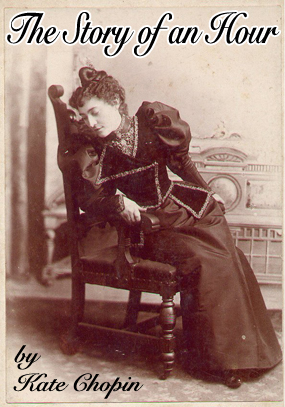
- Comment
- Reblog
-
Subscribe
Subscribed
Already have a WordPress.com account? Log in now.
 The Prayer Of A Stories Heart