Quote: “‘I love you now. You know I love you.’ ‘I know. But if I do it, then it will be nice again if I say things are like white elephants, and you’ll like it?’”(121).
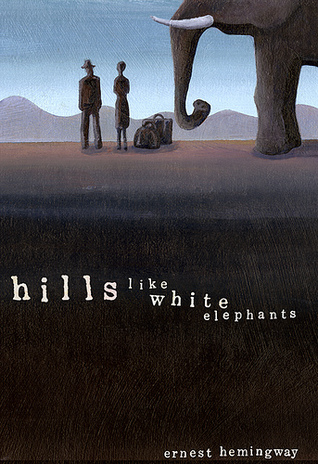
1. In Hemingway’s “Hills Like White Elephants” The story takes place at a train station that overlooks the Valley of the Ebro. The two main characters “the American” and “the girl” sit outside of the bar in the shade. They seem to be a couple. They waited for the express from Barcelona to go to Madrid, the express was, however, still forty minutes away. The American speaks Spanish and orders two beers because it is hot. The girl makes a comment about the hills looking like white elephants, but the man doesn’t seem interested in the comment. He says that he’s never seen white elephants shutting down the girl’s comment, she replies by agreeing that he wouldn’t know. The American takes this as an insult and fires back. The girl quickly changes the subject to avoid contention, and they get two more drinks called Anis del Toro. They both seem to avoid the true topic on their minds, until the American tells her, essential, to stop the act. They seem relatively quiet after this and don’t yet get to the topic at hand. This is when the American brings up the operation, that is never actually identified. The sound of this operation and its effects seem to be similar to that of an abortion. They argue back and forth for a while about this operation. The girl seems to not want it, but be ok with giving up her body if it meant that the two of them would be happy again. They keep talking about the simplicity of the operation, and that it would be fine. They argue about what the possibilities could be. The girl, now known to be named “Jig”, gets fed up with the conversation and begs him to stop talking. She seems overwhelmed with the decision one way or the other and threatens to scream. They both become quiet. The waitress announces to them that the train will arrive in five minutes, and the American brings the bags to the other side of the station. Upon arrival back to their table, he asks her if she feels better, and she replies with saying that there isn’t anything wrong with her and that she’s fine.
2. If I had to pick one quote from “Hills Like White Elephants” that would be the most important to the story, it would be while they were discussing the operation. They are discussing how the operation might affect them, and says, “‘I love you now. You know I love you.’ ‘I know. But if I do it, then it will be nice again if I say things are like white elephants, and you’ll like it?’”(121). In this quote the American is defending himself, telling Jig that he does love her and that she knows it. Then the girl is coming back by asking him that if she goes through with the operation will things go back to being normal and nice? That when she says something is like white elephants, will he like it, and not take it so literally with worry?
3. In this quote, she is seemingly pleading with him to just be ok with whatever happens. Whether she had the operation or not, she wants things to be back to normal back to being nice and relaxed. It seems that by her words of “nice again”, and “you’ll like it?”(121). That she was used to a leisure life, not caring about the consequences of her actions, and now she is faced with a big decision to get or not to get this operation thought to be an abortion. I think that at this moment in the story, she just wants to do whatever it takes to get rid of the consequence, she doesn’t want to be faced with the decision of having or not having the operation. This is also demonstrated earlier in the story when they drink beer and other alcoholic drinks, if the operation is an abortion, then she is pregnant. By drinking the alcohol it shows her lack of responsibility and lack of care for consequences. I think that Hemingway did an excellent way of introducing this conflict without specifically addressing it. I like that in writing this, he left a lot up to the reader’s interpretations to finish the story.
 The Prayer Of A Stories Heart